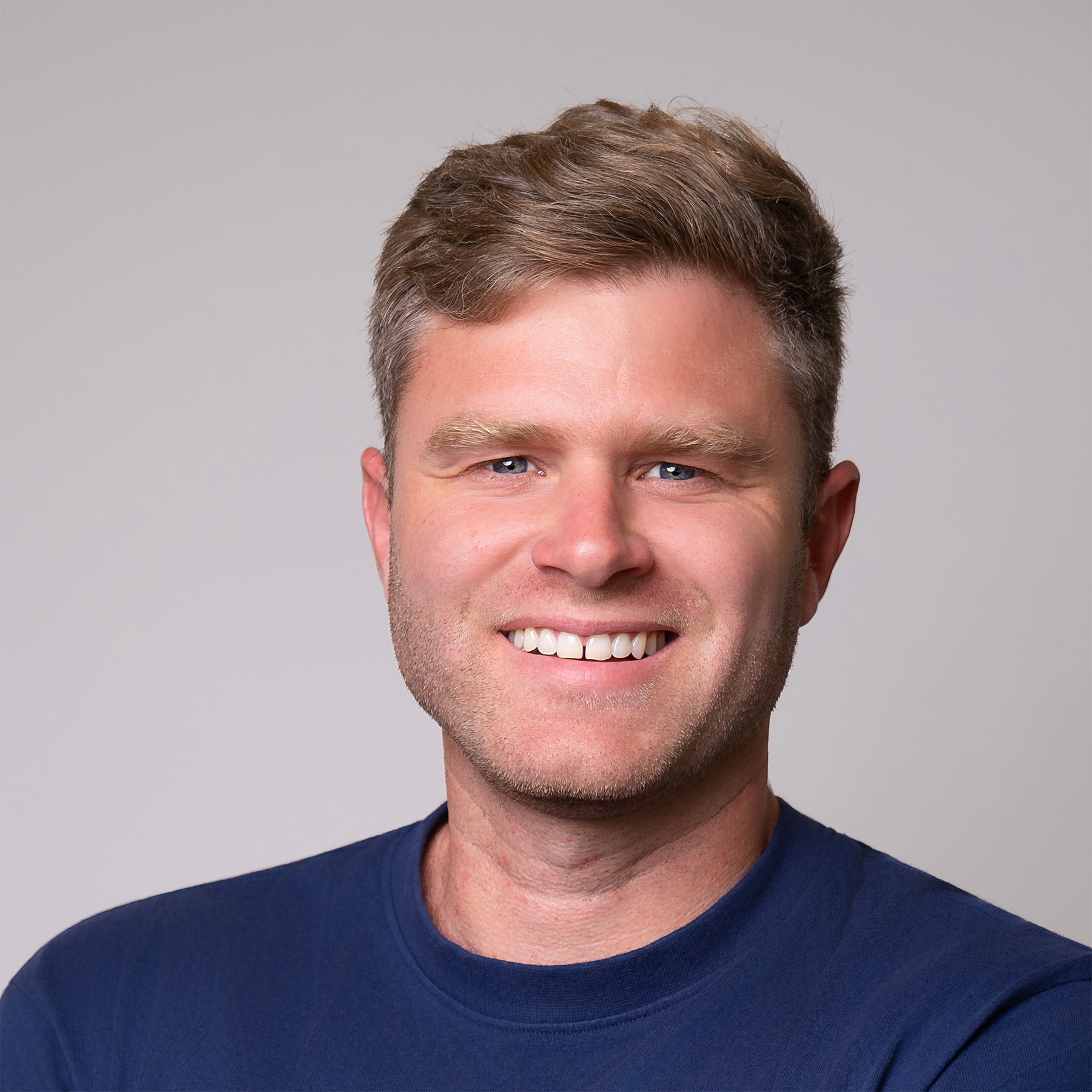
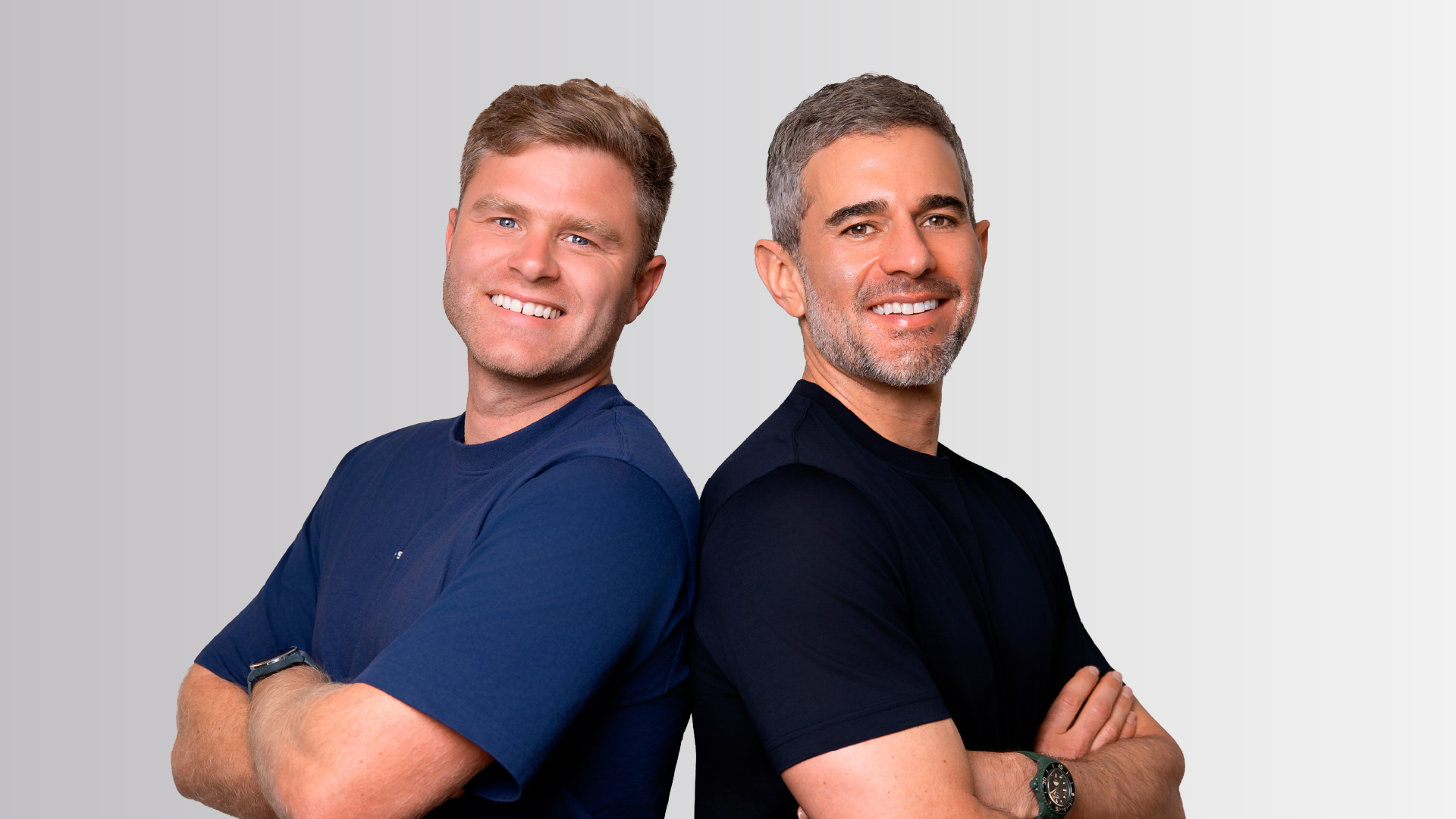

What happens when you turn a farming challenge into a business opportunity? For Zuney Wagyu, it sparked the creation of a business spanning the entire Wagyu beef value chain. In this episode, we explore the homegrown entrepreneurial success story with Devin Wells, unpacking how identifying a gap, taking a bold approach and embracing opportunity transformed a family-run farm into a multi-faceted business that’s a cut above the rest.
<iframe allow="autoplay *; encrypted-media *; fullscreen *; clipboard-write" frameborder="0" height="160" width="640" style="width:100%;max-width:640px;overflow:hidden;border-radius:12px;" sandbox="allow-forms allow-popups allow-same-origin allow-scripts allow-storage-access-by-user-activation allow-top-navigation-by-user-activation" src="https://embed.podcasts.apple.com/us/podcast/the-making-of-a-home-grown-success/id1834598214?i=1000802669024"></iframe>



Transcript
Chapters
- 00:00 - 02:35 | Opening
- 02:36 - 04:58 | The Story of Zuney Wagyu
- 04:59 - 08:28 | A Cut Above the Rest
- 08:29 – 18:28 | From Farm Roots to Business Growth
- 18:29 - 20:44 | Building a Business to Solve a Problem
- 20:45 - 28:54 | Where Farming Meets Entrepreneurship
- 28:55 - 30:52 | Home Grown Success Story
00:00 — Opening
Dov: Welcome to the Here We Grow podcast. Today I have a super interesting guest, Devin from Zuney Burgers.
Dov: Our story goes back to during COVID. I was in Shamwari, which is a game reserve in the Eastern Cape. We stopped in the middle of the bush and they made a bush braai and they served these burgers.
Dov: I eventually asked the guide and he said it's Wagyu beef and it's from one of the farmers in the area. He gave me the details and I was really excited to hear that you guys actually deliver to Joburg. Within two or three days I got delivered this hamper of Wagyu beef and I
Dov: I just remember the one thing that really stood out was not only the taste of the meat, but it was the customer service.
02:36 — The Story of Zuney Wagyu
Devin: Our fathers started farming with Wagyu in 2014. We farm in the same area in the Zuney Valley, and that's where our brand gets its name. It’s two families, the Klopper family and the Wells family.
Devin: Myself and Henning were working in Somerset West and in Cape Town. Just before COVID, we went back to the farm and we decided, you know, we've got this amazing product on the farm, but we don't know how to market it. Our dads can produce such an amazing product, but they're farmers; they want to focus on farming.
Devin: We wanted people to have the same experience that we have on holidays and weekends when we go back to the farm and braai with our family. So we decided that we were going to try and take Zuney Wagyu to the next level.
Devin: I'm in charge of the processing and the distribution of the Wagyu, the meat itself that we farm. So I buy the meat from our two fathers, the WK side of things, which is Wells Klopper Wagyu. Then there is a deboning facility and a butchery and a distribution plant on the farm. Then from there, that meat is then sold to our burger restaurants, which is run by Henning. We try and split our three businesses, or the primary, secondary, and tertiary sector, so that we each focus on our own business. We try and make sure that we each have the space and the freedom to make decisions.
04:59 — A Cut Above the Rest
Dov: Help me understand a little bit more around Wagyu. You hear about going to Japan and having this Kobe beef or this Wagyu beef, which is like super expensive and super premium, but it's not a typical South African thing.
Devin: Wagyu actually means "our cattle" in Japanese. Wa means our, gyu means cattle, so "our cattle". So it is a Japanese breed genetically predispositioned to not only store fat on the outside of its muscles, but also to store fat on the inside of its muscles.
08:29 — From Farm Roots to Business Growth
Dov: You mentioned growing up on a farm and coming back for weekends. What was farm life like growing up? When did you leave the farm, and was it difficult to come back?
Devin: I went to boarding school in Grade 5, so I left home quite young. I went over to Stellenbosch and studied there, and then went over to work in Australia for two years, then came back and worked in Somerset West. So I've never really been on the farm per se, only on holidays.
Devin: Now it's quite special for me. Me and my dad don't run the same business, but our businesses run parallel to one another. So, it's quite special that now that I've moved back to the farm, we're able to spend time together and work together.
Dov: Your recipe—being neighbors, friends, but I guess then father and son—is to almost have each one of you look after their own patch and have the autonomy to make decisions and kind of live or die by those decisions. Is that kind of the theory or the philosophy that you guys have focus?
Devin: I think the point you make there about making sure that we split the roles, we split the responsibilities, and make sure that everyone's got the freedom or the autonomy to make their own decisions is really important. Working with close friends and parents, we're lucky enough that we've got that level of trust and we have that separation.
Dov: It’s quite a departure point from farming and processing being relatively connected, but then going vertically integrated into retail is a completely different sport. Managing a restaurant, building a premium brand. I want to hear about aspirations for growth. How do you take that kind of farm mentality and bring it into a retail world?
Devin: So geographically, we were forced to make a decision: how are we going to get our product and how are we going to move this product? I want to say this sensitively—we were lucky that COVID happened. COVID gave us a step forward because South Africans started to trust delivery services.
18:29 — Building a Business to Solve a Problem
Dov: Time Out rated the Zuney burger as number two in the world for Time Out Burgers. How did you manage to go from this wholesale distribution business to a real consumer-facing retail business in a very competitive market? What was really the catalyst for that success?
Devin: So, it actually came out of a problem-solving moment. We actually had a surplus of trim. It’s easy to sell Wagyu steaks—everyone wants to try Wagyu steak—but trying to sell the trimmings was the problem.
Devin: We started testing the idea. The burgers we sold for the first time was in Kenton with a little gazebo set up throughout the holidays. After trading a full December in Kenton at the gazebo space, we then took a food truck through to the Cape Town Sevens. We realised that this is something, that there's something here. Why don't we see if we can convert this to brick and mortar? Now we've got our Time Out restaurant, our Rosebank restaurant, and our Kloof restaurant as well. So slowly but surely, growing nicely.
20:45 — Where Farming Meets Entrepreneurship
Dov: The way you guys did it was very smart: you almost tested small, pretty much risk-free. You proved up, as they say, like an MVP, and then you kind of built it from there. Was that kind of the journey that you guys went on to get the dads on board?
Devin: My and Henning always talk about a crawl-walk-run situation. We always try and grow organically.
Devin: We had to have a sit down and a conversation with our ballies. For them, I think it was a solution to a problem as well. We'll be able to flush all of your animals because we now have a market for this problem that we had.
Devin: One of our dads is risk-averse, and one of our dads is not so risk-averse, so there was a lot of discussion around it. But because we had experiences, we did a lot of research and came up with a bit of a business plan and a budget and what we wanted to do. We went to them with a plan. As a farmer, my dad, Henk, very realistic people. So you have to come to them with numbers, figures, images. You can't come to them with dreams and ideas.
Dov: I think that's such good advice. You know, notwithstanding the fact that you guys were pitching to your fathers, at the end of the day, they're businessmen, right? I think the same goes for when you're preparing a pitch for an investor: don't go there and sell a dream.
Dov: What the plan for Zuney Burgers now, is it to roll out more of the restaurants? Is there a franchisee opportunity?
Devin: There's a few things in the pipeline. We've got a franchise—I'm not going to share too much of where it's going to be happening, but there's a franchise. We're sort of trying to see which way we want to go: if we want to go into the JV side of things, or if we want to all own solely, or if we want to go into a franchisee model.
Dov: I think that's always the tussle that we as business owners have. You find something that works and you're torn between, "Okay, I want to try and replicate and scale this thing," but if I do that, it means that I lose a sense of control. The feeling of control is what gives you the comfort.
Dov: To really scale a premium brand becomes about having that control and owning that full vertical integration, but you need to be a little bit loose and fluid on that if you want to scale it. I think finding the balance between the two is what really separates the successful businesses from the not.
28:55 — Home Grown Success Story
Dov: Devin, it's such a phenomenal story. It feels like you guys are actually just getting started. It's a real homegrown success story, and I couldn't be more proud to be a supporter, to have you on the show.
Dov: When I finish the podcast with everyone, I finish with the same question: When you are 80 years old and you look back, what would be the thing that you want to be the most proud of from a growth perspective?
Devin: That we were able to prove that you can work with friends and family, and that not all family businesses end up in fighting and arguments. So, I think I'll be quite proud if me and my dad make it through, and myself and Henning and Henk, we all make it through this process, and we build it into something together as a unit, as the Wells and the Klopper families. I think for me, I'll be quite proud if we could get that accomplished.


